CPAP FAQ main image CPAP FAQ image

CPAP FAQ

Whether you've just been diagnosed with sleep apnea or you've been using CPAP equipment for years, there's always another question around the corner. We've gathered the ones our team hears most often and answered them here. Can't find what you're looking for? Our sleep therapy team is happy to help via email, phone or live chat.


About sleep apnea

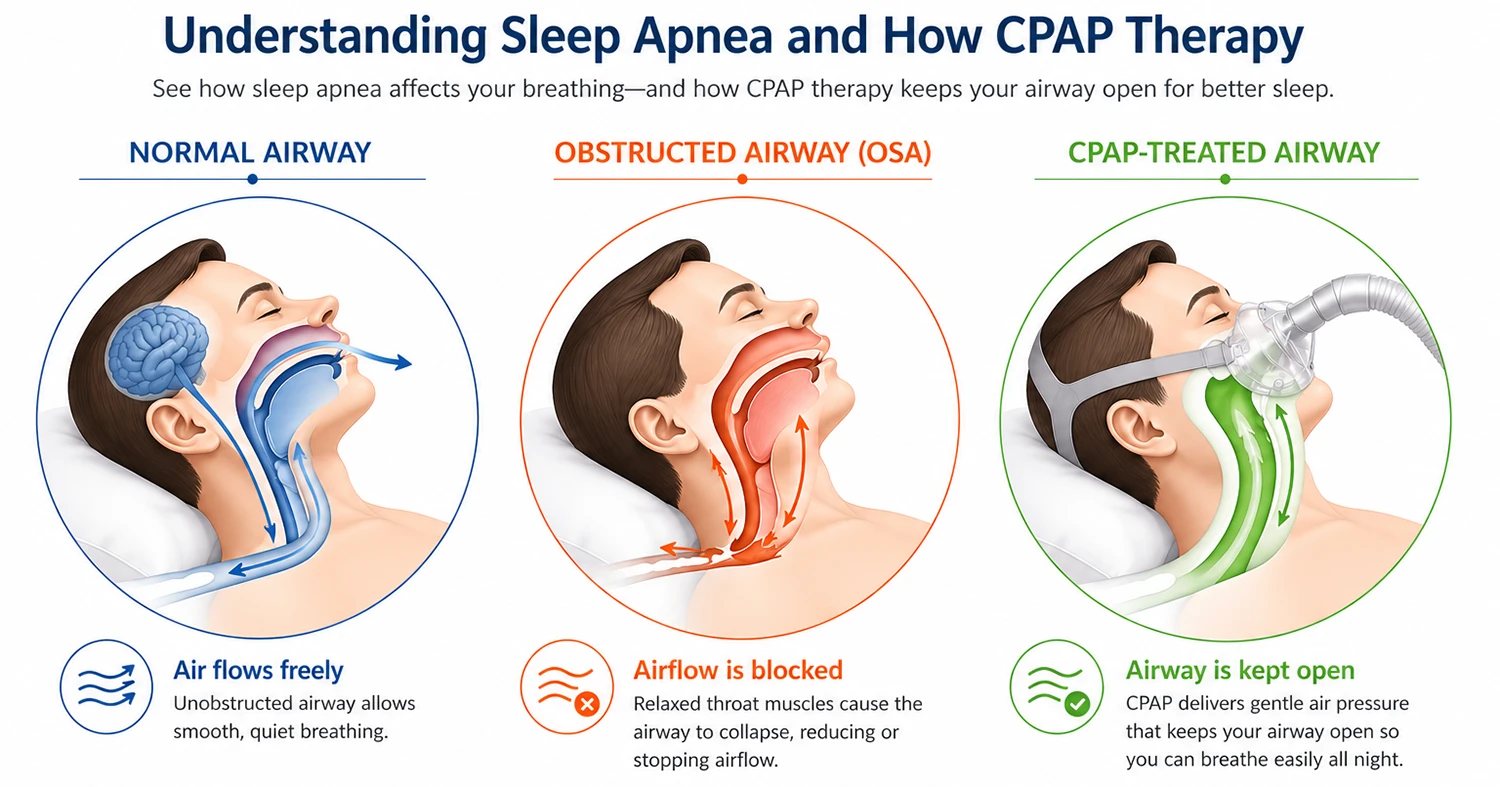
Sleep apnea is a common sleep disorder where your breathing repeatedly stops and starts during sleep. The most common form — obstructive sleep apnea (OSA) — occurs when the muscles at the back of the throat relax too much, causing the airway to narrow or close completely. Your brain then triggers a brief arousal to restart breathing, often without you being fully aware of it. These episodes can happen dozens or even hundreds of times a night, fragmenting your sleep and reducing the oxygen reaching your brain and organs. Left untreated, sleep apnea is linked to serious health conditions including high blood pressure, heart disease, stroke, type 2 diabetes, and daytime fatigue severe enough to impair driving.

Diagram showing normal airway vs obstructed airway in sleep apnea and how CPAP therapy keeps the airway open

The most recognisable symptoms are loud, persistent snoring and excessive daytime sleepiness — the kind that leaves you nodding off during meetings or struggling to stay awake on the drive home. Other common signs include waking with headaches, a dry mouth or sore throat, difficulty concentrating, irritability, and frequent nighttime urination. A bed partner may notice you gasping, choking, or going silent for several seconds at a time. Because many of these symptoms are easy to dismiss as simply "being tired," sleep apnea is significantly under-diagnosed. If any of these sound familiar, it's worth discussing a sleep study with your GP.

Obstructive sleep apnea (OSA) is by far the most common type. It occurs when the physical structure of the upper airway — the tongue, soft palate, or throat muscles — collapses during sleep, blocking airflow. Your brain is still sending the right breathing signals; the problem is purely mechanical.

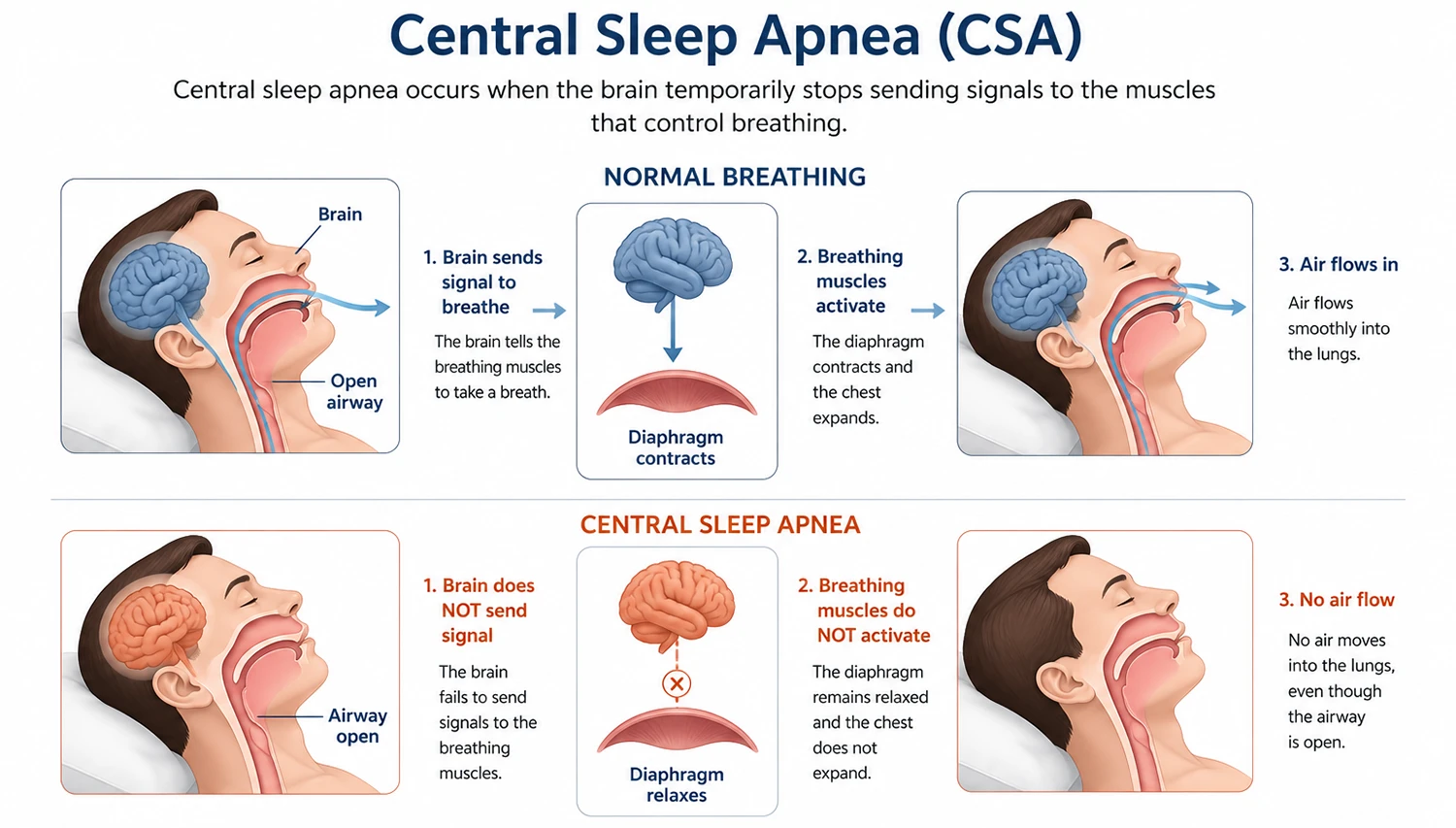
Central sleep apnea (CSA) is less common and works differently. Here, the brain temporarily fails to send the correct signals to the muscles that control breathing. There's no physical blockage — the airway is clear, but breathing simply doesn't happen for a moment. CSA is often associated with heart failure, neurological conditions, or the use of certain medications.

Because the cause is neurological rather than mechanical, standard CPAP machines are often not the right fit for CSA. These cases are more typically managed with an ASV (adaptive servo-ventilation) machine, which actively monitors your breathing pattern and delivers precisely timed pressure support to compensate for missed breaths — you can browse our range of BiLevel PAP machines which includes ASV options. Treatment should always be guided by a specialist following a professional sleep study, as the right machine depends entirely on what your results show.

Most people treated with CPAP have obstructive sleep apnea, but if you're unsure which type applies to you, a sleep test is the essential first step.

Diagram showing normal breathing vs Central Sleep Apnea (CSA)

Untreated sleep apnea does far more than leave you tired. The repeated drops in blood oxygen and the stress of waking hundreds of times a night put significant strain on your cardiovascular system. Over time, this is strongly associated with:

  • High blood pressure (hypertension)
  • Increased risk of heart attack and stroke
  • Type 2 diabetes and insulin resistance
  • Cognitive decline and memory problems
  • Depression and anxiety
  • Increased risk of motor vehicle accidents due to daytime sleepiness

The good news is that effective CPAP therapy significantly reduces these risks for the vast majority of patients. Many people report feeling meaningfully better within the first week of consistent use.

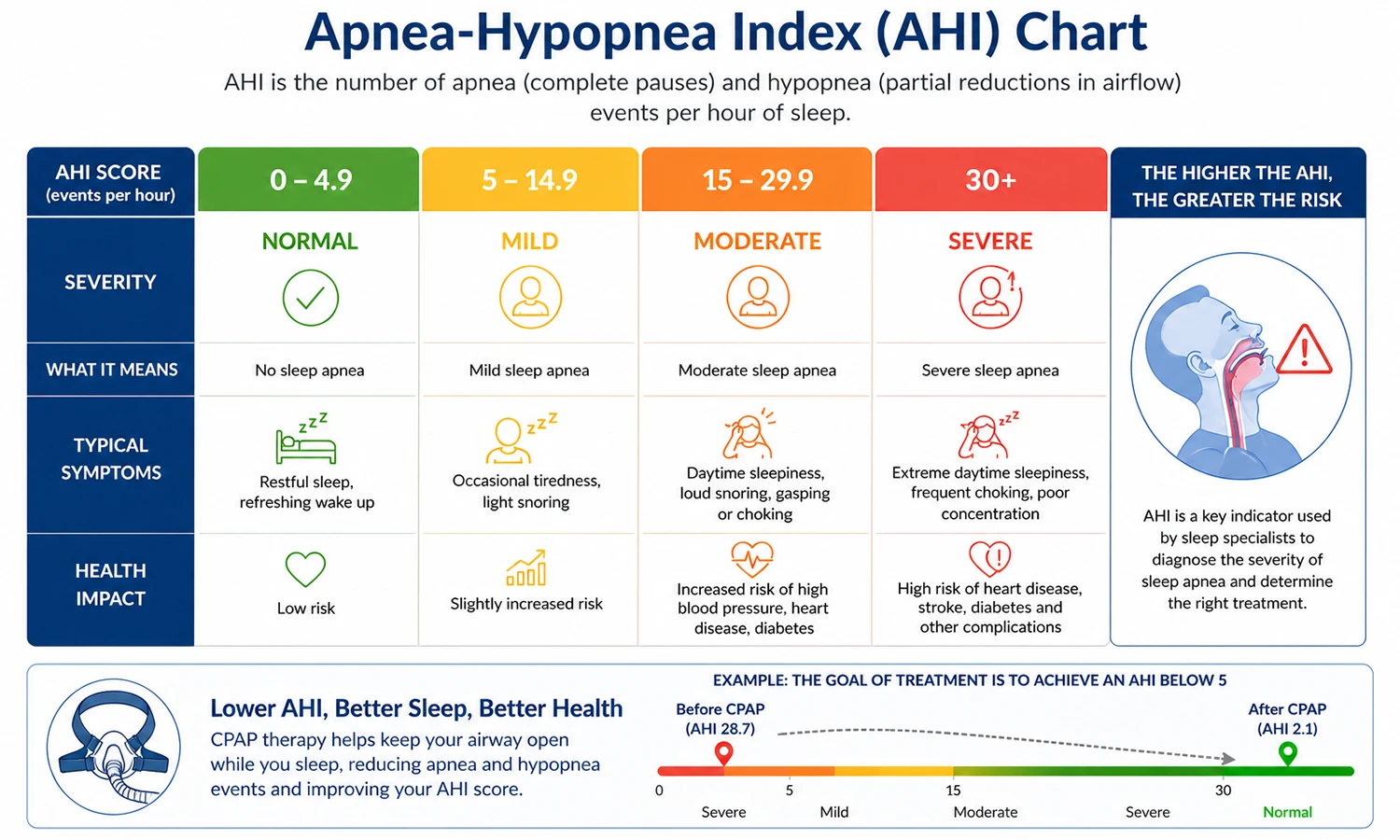
AHI stands for Apnea-Hypopnea Index, and it's the primary measure used to diagnose sleep apnea and gauge its severity. It counts the average number of breathing interruptions (apneas — full stops) and partial interruptions (hypopneas — significant reductions in airflow) per hour of sleep. The standard severity classification is:

  • Normal: fewer than 5 events per hour
  • Mild sleep apnea: 5–14 events per hour
  • Moderate sleep apnea: 15–29 events per hour
  • Severe sleep apnea: 30 or more events per hour

Your AHI is determined during a sleep study and determines both your diagnosis and the type of treatment recommended. Once you're on CPAP therapy, your machine records your nightly AHI — modern machines like the ResMed AirSense 11 display this each morning and sync it to the myAir app so you can track your progress.

Apnea-Hypopnea Index (AHI) Chart

"Sleep apnea" is the American English spelling; "sleep apnoea" is the British and Australian English spelling. Both are used in Australia — medical literature and government health agencies tend to use "apnoea", while everyday usage increasingly favours the shorter "apnea". Either spelling is correct, and both refer to exactly the same condition. On this site you'll see us use "sleep apnea" as our primary spelling, with "sleep apnoea" used occasionally — purely to make sure we show up in searches regardless of which spelling you use.


Getting started with CPAP

It depends on the type of machine:

  • CPAP Auto Pressure (APAP) machines: No prescription is required to purchase. These machines automatically adjust pressure throughout the night, so a fixed pressure setting isn't needed. They are the most commonly purchased type and can be bought directly from CPAP Club.
  • CPAP Fixed Pressure machines: No prescription is legally required, but one is strongly recommended — unless you are upgrading from an existing CPAP machine and already know your prescribed pressure setting. Without a sleep study result, there's no reliable way to determine the correct fixed pressure for your individual condition. We're happy to help you work through this — contact our team if you're unsure.
  • BiPAP / Bi-Level machines: A prescription from a sleep specialist is required. BiPAP therapy uses two separate pressure levels and is prescribed for specific clinical conditions — it's not suitable for general purchase without specialist guidance.

Regardless of machine type, having a formal diagnosis from an accredited sleep study is important for two additional reasons: it's required by most private health funds to claim a rebate on your equipment, and machines purchased from an authorised Australian supplier like CPAP Club come with full local manufacturer warranties — which overseas purchases typically do not.

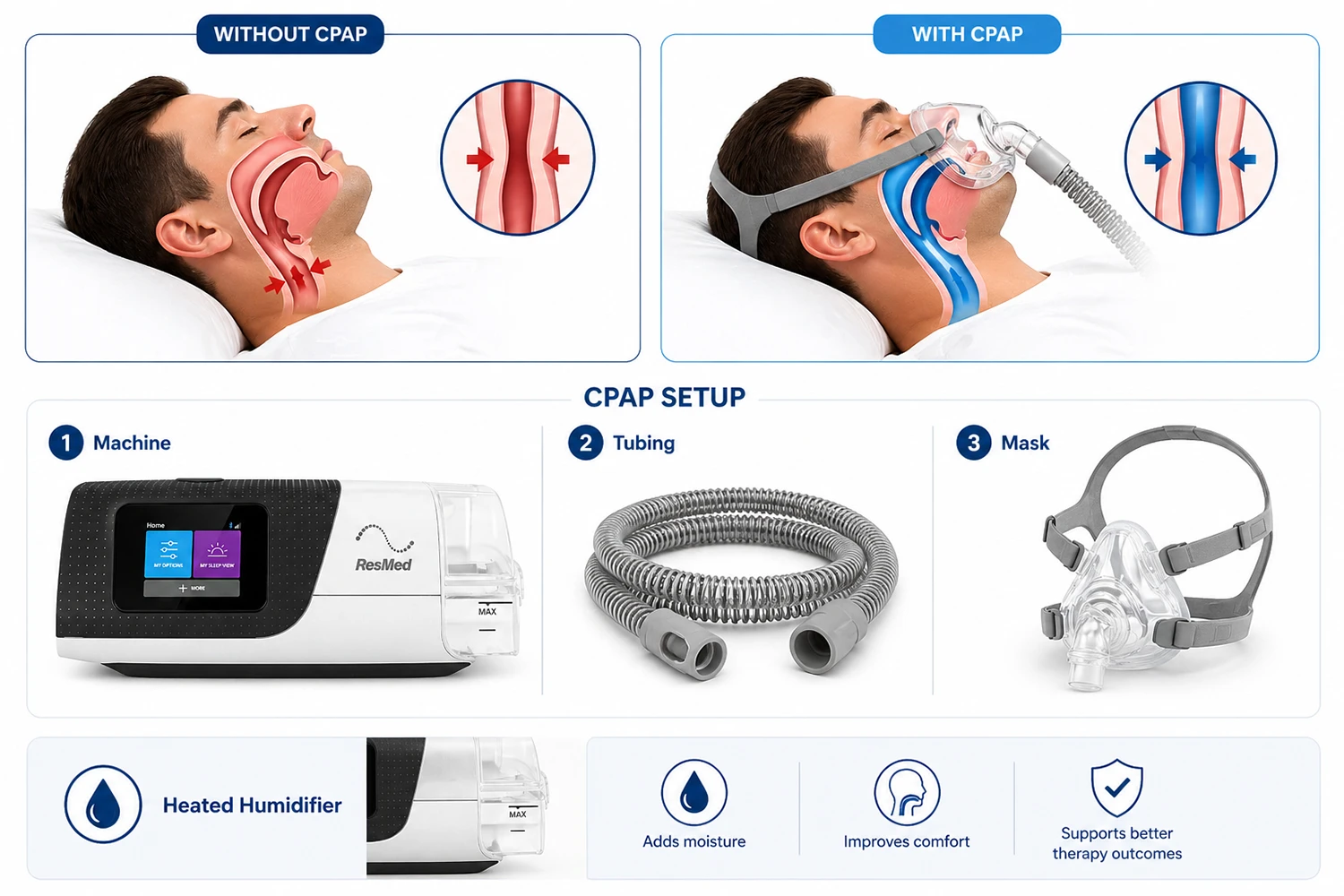
CPAP stands for Continuous Positive Airway Pressure. The therapy works by delivering a steady, gentle stream of pressurised air through a mask worn during sleep. This air pressure acts as a pneumatic splint — it keeps your upper airway open and prevents it from collapsing, so breathing remains uninterrupted throughout the night.

A standard CPAP setup includes three components: the machine (which generates and controls the airflow), the tubing (which carries the air), and the mask (which delivers it to your airway). Most modern machines also include a heated humidifier, which adds moisture to the air to prevent dryness in your nose and throat. Browse our CPAP starter packages to see machine, mask and accessory combinations suited to new users.

Diagram showing how CPAP therapy works using an CPAP machine to keep the airway open during sleep

In everyday use, "CPAP" has become the umbrella term most people use for all positive airway pressure therapy — but there are meaningful differences between the machine types:

  • CPAP Fixed Pressure delivers a single constant pressure all night, every night — set to a specific level determined by your sleep study results. It's the original form of CPAP therapy and is still widely prescribed, particularly where a precise fixed pressure has been established by a specialist.
  • CPAP Auto Pressure (APAP) automatically adjusts the delivered pressure breath by breath, increasing when it detects an obstruction and easing back during clear breathing. It only ever applies as much pressure as is needed at any moment, which many people find more comfortable — especially across different sleeping positions. The majority of modern machines sold in Australia, including the ResMed AirSense 11 AutoSet and Fisher & Paykel SleepStyle, are Auto Pressure machines. In common usage these are still widely called "CPAP machines."
  • BiPAP / Bi-Level uses two distinct pressures — a higher pressure on inhalation and a lower pressure on exhalation. It's prescribed for people who find it difficult to exhale against continuous pressure, or for those with central sleep apnea or other respiratory conditions. BiPAP requires a specialist prescription and is not available for general purchase.

If you're not sure whether a Fixed or Auto Pressure machine is right for you, our team can help. Browse our CPAP machines to compare both types side by side.

Consistent CPAP use is one of the most effective treatments available for obstructive sleep apnea — and most people notice improvements quickly. The most commonly reported benefits include:

  • Dramatically reduced or eliminated snoring
  • Significantly improved daytime energy and alertness
  • Better concentration and mental clarity
  • Improved mood and reduced irritability
  • Lower blood pressure (often measurably within weeks)
  • Reduced risk of long-term cardiovascular complications
  • Better quality sleep for bed partners as well

The key is consistency — CPAP works best when used every night, for the full duration of sleep. Our team is here to help troubleshoot any difficulties and find the right mask and settings for you.

Many people notice an improvement in how they feel within the first few nights of CPAP use — less morning headaches, reduced grogginess, and a sense of having slept more deeply. The most significant improvements in daytime energy and alertness typically appear within two to four weeks of consistent nightly use.

Physiological benefits — such as reductions in blood pressure — tend to develop over a longer period, often one to three months of regular therapy. The critical factor is consistency: using your CPAP every night, for the full duration of sleep.

For most people with obstructive sleep apnea, CPAP is a long-term treatment rather than a cure. Sleep apnea is typically a chronic condition — the underlying anatomy or physiology that causes it doesn't resolve on its own. If you stop using CPAP, the symptoms generally return.

That said, significant lifestyle changes — such as substantial weight loss or treatment of nasal obstruction — can sometimes reduce the severity of sleep apnea. Any adjustments to your therapy should be reviewed by your sleep specialist with a follow-up sleep study.


Cost & buying in Australia

CPAP machine prices in Australia vary depending on the type, brand, and features. As a general guide:

  • Entry-level machines: approximately $700–$1,000. This tier is typically Fixed Pressure machines, though some entry-level Auto Pressure (APAP) machines are available — usually from lesser-known brands, often Chinese based brands
  • Mid-range APAP machines (such as the ResMed AirSense 10 or Philips DreamStation): approximately $900–$1,300
  • Premium APAP machines (such as the ResMed AirSense 11 AutoSet or Fisher & Paykel SleepStyle+): approximately $1,300–$1,800
  • Travel CPAP machines: approximately $800–$1,400
  • CPAP masks: approximately $80–$250 depending on style and brand

Our CPAP package deals bundle a machine and mask together at a better combined price. We also offer PayPal Pay in 4, Zip, Afterpay, and Humm interest-free payment options.

Yes — most Australian private health funds offer a rebate toward CPAP machines and accessories under their Extras cover, provided you have a formal diagnosis of obstructive sleep apnea from an accredited sleep study. Rebates of $200–$800 on a machine are common, though the exact amount varies between funds and levels of cover.

To claim, you'll generally need:

  • A sleep study report confirming your diagnosis
  • An itemised tax invoice from an accredited Australian CPAP supplier — CPAP Club qualifies
  • In some cases, a letter from your treating GP or specialist

Always check directly with your fund before purchasing, as level of cover, policies and waiting periods vary. If you've purchased from an overseas retailer, you will not be eligible for a rebate — only authorised Australian suppliers qualify.

Medicare does not directly fund the purchase of CPAP machines for private patients. However, Medicare does cover much of the cost of the diagnostic sleep study needed to get diagnosed, as well as GP and specialist consultations along the way.

State and territory governments operate public funding programs for eligible patients — particularly those with moderate to severe OSA who hold healthcare concession cards:

  • NSW: EnableNSW Home Respiratory Program
  • QLD: Queensland Health Sleep Disorders Program
  • VIC, SA, WA, TAS, ACT, NT: Similar programs exist through public hospital respiratory clinics — speak with your GP or specialist about referral pathways in your state.

DVA (Department of Veterans' Affairs) cardholders diagnosed with sleep apnea may also be eligible for coverage. For those purchasing privately, our package deals and interest-free payment options are designed to make therapy as affordable as possible.

We don't offer our own payment plans directly, but we do support a range of interest-free payment options at checkout through third-party providers — Zip, Afterpay, Humm, and PayPal Pay in 4. These let you spread the cost of your CPAP equipment across multiple payments without paying interest. Simply select your preferred option at checkout. Standard terms and credit approval conditions apply through each provider.

BNPL Paypal Pay in 4
BNPL with Afterpay
BNPL with ZIP
BNPL with Humm

Yes. If you find the same product at a lower price from another authorised Australian CPAP retailer, we'll do our best to match it. To request a price match, contact our team before completing your purchase with a link to the competitor's listing. We only price match against authorised Australian retailers selling genuine, locally warranted products — we cannot match prices from overseas retailers or grey-market sellers, as those products do not carry Australian manufacturer warranties and are not eligible for health fund rebates.

For full details on eligibility and conditions, please see our Price Match Guarantee policy.

CPAP Club Price Match Guarantee


CPAP masks & machines

CPAP masks come in three main styles, each suited to different breathing habits and sleep preferences:

  • Full face masks cover both the nose and mouth. They are the most reliable option for mouth breathers or people who experience nasal congestion. Browse our full face masks.
  • Nasal masks cover just the nose, sitting under the nostrils or over the full nose area. They're a popular middle ground — lower profile than a full face mask, but with a more secure seal than a nasal pillow. Browse our nasal masks.
  • Nasal pillow masks are the smallest and lightest option, with two small prongs that sit just at the nostril entrance. They're popular with side sleepers and those who feel claustrophobic in larger masks. Browse our nasal pillow masks.

Not sure which style is right for you? Our in-depth guide How to Choose the Right CPAP Mask: Nasal, Pillows, or Full Face? walks through the key differences in detail — or our team can talk through your sleeping position, breathing habits, and any skin sensitivities to help you find the best fit.

A fixed pressure machine delivers exactly the same pressure all night, every night — the level is set by your sleep specialist based on your sleep study results and does not change.

An auto-adjusting machine (APAP) continuously monitors your breathing and automatically increases pressure when it detects apnea events and reduces it during periods of clear, unobstructed breathing. For many patients this improves comfort, particularly during lighter sleep stages or when changing positions. APAP machines are now the most commonly prescribed type in Australia. View our full range of CPAP machines to compare both types.

Yes — and in fact, side sleeping is generally encouraged for people with sleep apnea, as it helps keep the airway open. Most CPAP masks are designed to accommodate side sleeping, though some styles work better than others. Nasal pillow masks and compact nasal masks typically perform best for side sleepers due to their low profile. Full face masks can also be used while side sleeping — a CPAP-specific pillow with cut-outs can help prevent the mask from shifting during the night. Our team can recommend a suitable mask style based on your preferred sleep position.

Consistent snoring while using CPAP usually indicates one of three things: the mask is leaking and not maintaining adequate pressure; the pressure setting is too low for your current needs; or the mask is not the right fit or style for your face and sleeping position. Check your machine's leak report in its companion app (e.g. myAir for ResMed devices), and contact our team if you need help troubleshooting — persistent snoring on CPAP typically means your therapy isn't working as effectively as it should be.

Dry mouth is most commonly caused by breathing through your mouth during sleep, allowing pressurised air to escape without being humidified by the nasal passages. Adding a chin strap can help if you're using a nasal or nasal pillow mask. Switching to a full face mask that covers both the nose and mouth is often the most effective solution.

A stuffy or congested nose is usually a response to dry air. Make sure your machine's heated humidifier is turned on and set to an appropriate level — increasing the humidity setting often resolves this within a night or two. A saline nasal spray used before bed can also help. Speak to your GP if you have persistent nasal obstruction, as there may be an underlying cause worth addressing.

Yes. Most modern CPAP machines — including all ResMed, Fisher & Paykel, and Philips Respironics models we stock — are approved for use onboard aircraft and automatically adjust for altitude. Your CPAP machine can be brought as carry-on luggage and does not typically count toward your carry-on allowance with most airlines, as it is a medical device.

A few practical notes: remove your water chamber before going through airport security; carry your machine in a dedicated bag rather than checked luggage; and bring a letter from your specialist in case you're asked to demonstrate it's a medical device. Browse our travel CPAP machines if you'd prefer a compact dedicated travel unit.


Caring for your CPAP equipment

Regular cleaning keeps your equipment hygienic, effective, and lasting longer. Here's a practical routine:

  • Daily: Rinse your mask cushion and water chamber with warm, clean water. Allow to air dry away from direct sunlight.
  • Weekly: Wash your mask (cushion, frame, and headgear), tubing, and water chamber with warm water and a small amount of mild, fragrance-free dish soap. Rinse thoroughly and allow to dry completely before reassembling.
  • Monthly: Check and clean or replace filters. Wipe down the exterior of the machine with a lightly damp cloth.

Avoid strong detergents, bleach, alcohol wipes, or dishwashers on any part of your CPAP equipment. For a full cleaning guide, visit our CPAP equipment care page. We also stock a range of CPAP cleaning wipes and solutions for quick daily maintenance.

CPAP parts wear out with regular use and should be replaced on a schedule to maintain effective therapy and hygiene:

Part Recommended replacement
Mask cushion / nasal pillows Every 1–3 months
Mask frame Every 6–12 months
Headgear Every 6–12 months
CPAP tubing Every 6–12 months
Disposable filters Every 2–4 weeks
Reusable filters Monthly wash; replace every 6 months
Humidifier water chamber Every 6–12 months

Use our CPAP Parts Finder at the top of the page to find the exact replacement parts compatible with your machine or mask model.

Most CPAP machines are built to last five years or more with proper care. That said, technology moves quickly and machines from a few years ago may lack features — like APAP auto-adjustment, integrated humidification, and companion apps — that significantly improve comfort and compliance. Many health funds also provide rebates toward a new machine every three to five years.

If your machine is older than five years, becoming noisy, or no longer meeting your therapy needs, it's worth considering an upgrade. Browse our current CPAP machine range or contact our team to discuss your options.

Distilled water is the recommended choice for your CPAP humidifier. Because it has had minerals, impurities, and contaminants removed through the distillation process, it won't leave mineral deposits or white residue inside your humidifier chamber, and it reduces the risk of bacteria or mould growth over time. Distilled water is widely available at supermarkets such as Coles and Woolworths and many independent grocery stores, pharmacies and even some hardware stores across Australia, usually at a low cost per litre.

Here's a quick guide to how common water types compare:

Distilled water Best choice — minerals and impurities fully removed ✓ Recommended Demineralised water Good alternative — most minerals removed, process differs slightly ✓ Acceptable Boiled tap water (cooled) Kills bacteria, but minerals remain — short-term use only ⚠ Short-term only Still bottled / spring water Seems clean, but naturally contains minerals — not ideal ⚠ Not ideal Tap water Minerals cause buildup, may harbour microorganisms — avoid ✗ Not recommended

Demineralised water is a good alternative and, depending on the purification process used, can be just as pure as distilled — or even purer. High-purity processes such as reverse osmosis combined with deionisation (RO + DI) can achieve lower total dissolved solids than standard distillation, and some advanced methods also remove volatile organic compounds that distillation can occasionally miss. However, as "demineralised" covers a wide range of processes, distilled water remains the more consistent and reliable choice when buying off the shelf, where you can't always tell how the water was treated.

Boiled tap water that has been allowed to cool is safer than unboiled tap water — boiling kills bacteria and microorganisms — but it is not equivalent to distilled water. Boiling does not remove dissolved minerals, so you'll still get the same buildup in your humidifier chamber over time. It's a reasonable short-term fix in a pinch, but shouldn't become a regular habit.

Still bottled water (including spring water) might seem like a clean option, but it typically still contains naturally occurring minerals and is not ideal for regular use in a humidifier.

Tap water is not recommended. Even if your local tap water is safe to drink, it contains dissolved minerals that will gradually build up inside your humidifier chamber, shorten its lifespan, and could potentially harbour microorganisms that get carried into your airways during therapy.

If you ever run out of distilled water, boiled tap water that has been allowed to cool is the next best option — it won't eliminate mineral buildup, but it at least removes bacteria and microorganisms. If boiling isn't practical, running your CPAP for a single night without water — using the humidifier dry or switching humidification off temporarily — is preferable to using unboiled tap water. Either way, get back to distilled water as soon as possible and clean your chamber thoroughly before refilling.

If familiar fatigue, morning headaches, or snoring return while you're on CPAP, don't ignore it. The most common causes are equipment-related: a mask that has degraded and is no longer sealing properly, worn cushions or headgear causing leaks, or a pressure setting that needs adjusting as your condition changes over time.

Start by checking your machine's data — most modern machines report your AHI and leak rate nightly through their companion app. If the numbers have worsened, review the mask fit and filter condition first. If symptoms persist, book a review with your sleep specialist — your pressure requirements may have changed.

Adjusting to CPAP takes time, and difficulty falling asleep in the first few weeks is very common. A few things that help:

  • Use the ramp feature: Most machines can be set to start at a lower, more comfortable pressure that gradually increases to your therapeutic level as you fall asleep.
  • Wear the mask while awake: Put it on while watching TV or reading for 20–30 minutes before bed. This acclimatises your brain to the sensation without the pressure of trying to sleep.
  • Check the mask fit: Discomfort is often a mask fit issue. A mask that leaks, presses too hard, or doesn't suit your sleeping position makes falling asleep much harder.
  • Maintain good sleep hygiene: A consistent bedtime, a cool and dark room, and limiting screen exposure before bed all help your brain transition to sleep more easily.

If you've tried these steps and are still struggling after four to six weeks, get in touch with our team — we can often identify the issue quickly and suggest adjustments or a different mask style.


Still have questions?

Our sleep therapy team is made up of experienced CPAP specialists who use the products we sell every day. Whether you're new to CPAP therapy or a long-term user looking for troubleshooting advice, we're here to help. Call us on 1300 99 CPAP (1300 992 727), use the live chat, or browse our full range of CPAP machines, CPAP masks, and starter packages.

Which type of CPAP machine is right for you? The answer depends on your individual needs and preferences.

Learn about sleep apnea symptoms and health risks.

View common questions about CPAP therapy and usage issues.

Your questions answered on mask types and comfortable use.

Common questions in relation to machine health and usage.

See recommended cleaning schedules and questions.